Triples
One uniform data structure
In linked data, all data uses a very simple and universal structure. Anything that is described, every fact, is described like this:
A certain thing (a subject) has a certain value for a certain property.
And each such fact, is called a "triple".
Triples follow the following general form:
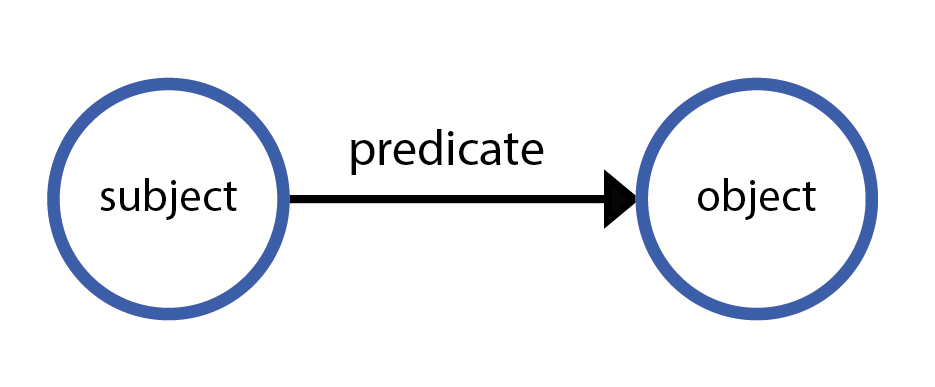
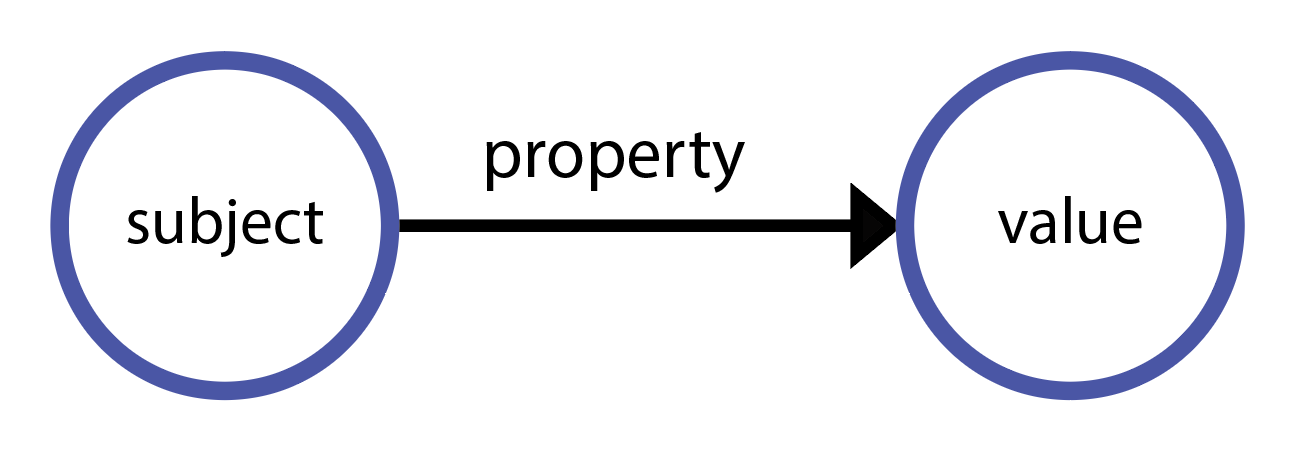
However, in LINCD (and many other places working with linked data), we like to use more intuitive language: things (subjects) have properties and values:
An example
Let's take an example fact:
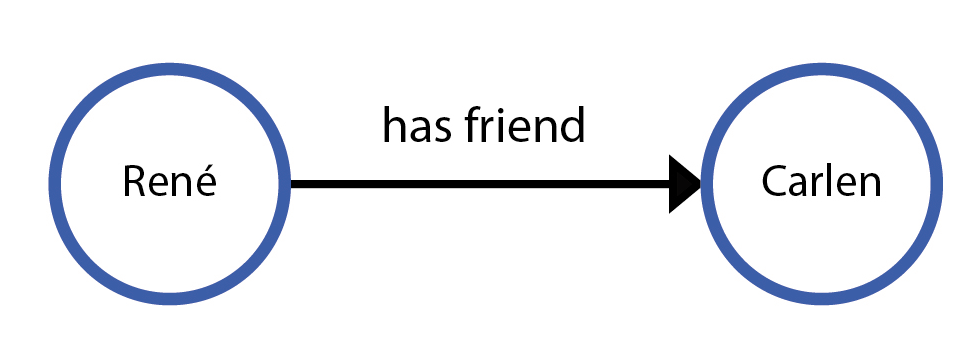
Rene (the subject), for the property has friend has a value Carlen.
This is stored in one triple. Multiple facts (triples) together form a directed graph, where each triple is one edge between two nodes.
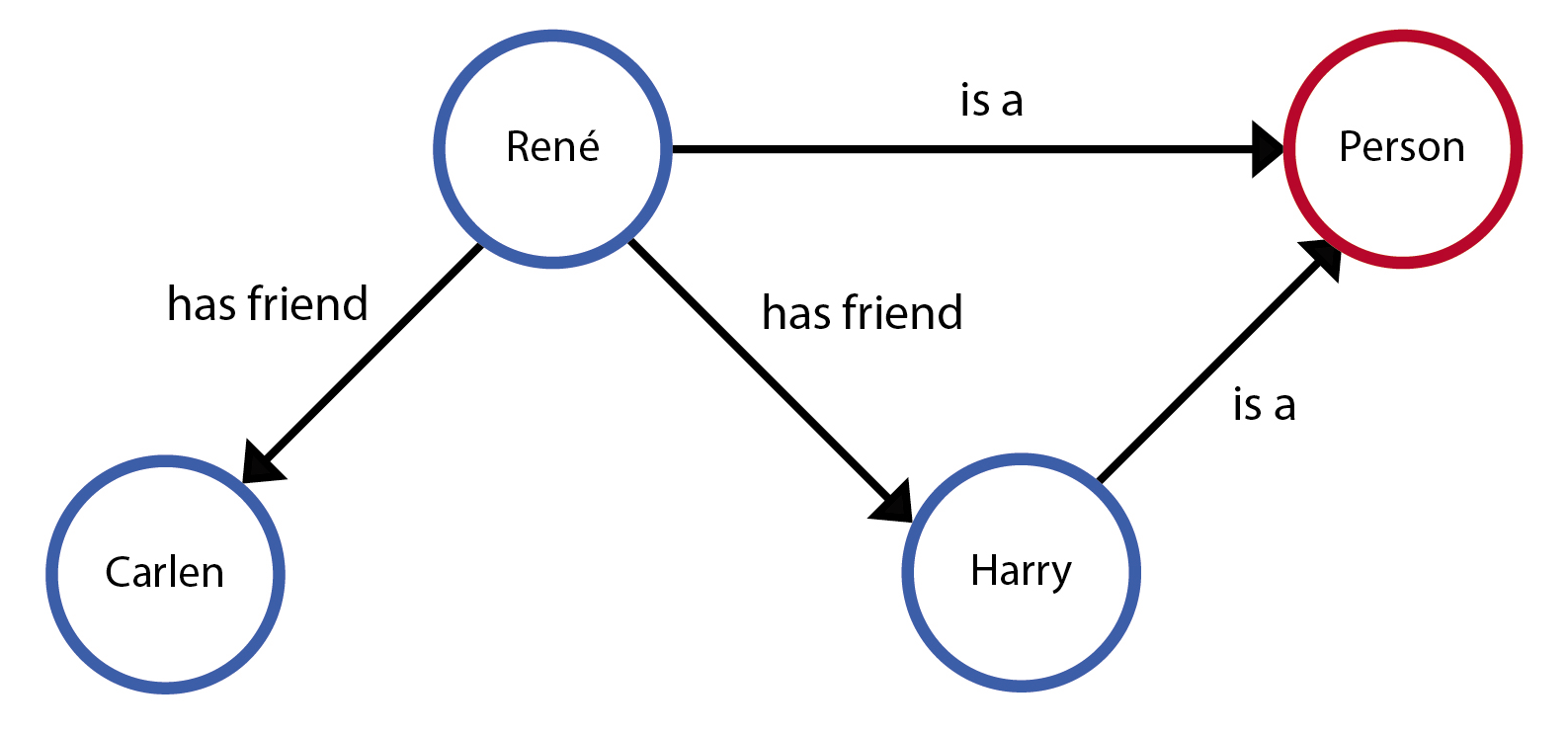
This graph above represents 4 facts. Also note that René has two values for the property 'has friend', which are each stored in different triples.